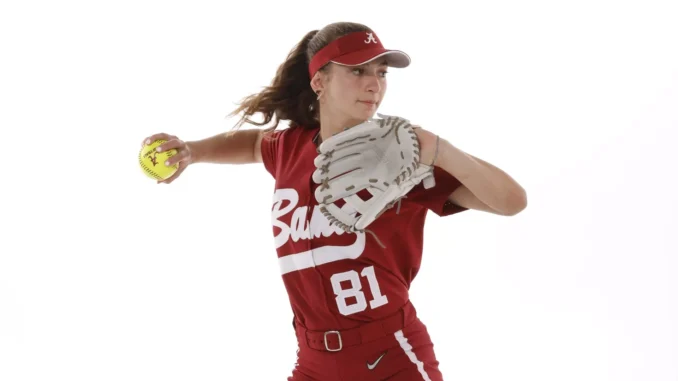
The softball world stood still for a moment when news broke that Mari Hubbard would officially enter the transfer portal after an emotional and challenging stretch that changed the course of her career. For many fans, the announcement felt far bigger than a normal transfer story. This was not simply about a player looking for more playing time or a different coaching system. This was about recovery, identity, uncertainty, and the difficult emotional toll that injuries can place on an athlete whose entire life has revolved around competition.
In her heartfelt message, Hubbard revealed details that immediately resonated with athletes and fans across the country. She explained that during the fall she was rear ended while driving to class, an accident that resulted in a severe concussion. What initially may have appeared to be a temporary setback gradually evolved into a lingering health issue that forced her to redshirt the season and focus entirely on recovery. For someone who had spent years training, competing, and building momentum on the field, stepping away from the game became one of the hardest decisions she had ever faced.
The reality of concussions in sports is often misunderstood by people outside athletics. Fans see athletes in uniforms and assume toughness alone can solve everything. But head injuries can affect every aspect of life. Concentration becomes difficult. Bright lights feel overwhelming. Normal daily routines suddenly become exhausting. The emotional side of recovery can become just as painful as the physical symptoms themselves. For a competitive softball player who thrives in fast-paced environments filled with noise, pressure, and split-second decisions, the mental battle can feel isolating.
Hubbard’s statement reflected that reality without trying to dramatize it. There was honesty in her words. She did not portray herself as a victim. Instead, she sounded like someone who had endured months of frustration while trying to rediscover stability. That honesty is partly why the announcement spread so quickly among softball communities. Athletes understood the pain behind the message because many of them have quietly fought similar battles themselves.
Before the injury, Hubbard had been viewed as one of the promising young players capable of carving out a major role within the program. Coaches admired her determination. Teammates respected her work ethic. Fans appreciated the energy she brought whenever she stepped onto the field. Even when she was not dominating headlines, there was a growing sense that her best softball was still ahead of her.
That optimism made the concussion setback even more heartbreaking.
For athletes, momentum means everything. Careers can change rapidly depending on confidence, health, and opportunity. Hubbard had entered the fall focused on development and improvement, hoping to continue building toward a breakout future. Instead, one unexpected moment on the road completely altered her timeline. Suddenly the focus shifted away from batting practice, defensive drills, and game preparation. Instead, the priority became healing.
In many ways, injuries create invisible loneliness for college athletes. The team continues practicing. Games continue happening. Stadiums still fill with cheering fans. Social media conversations move on quickly. Meanwhile, injured players often spend long hours alone with trainers, doctors, and rehabilitation schedules. The separation can be emotionally draining because athletes are accustomed to being part of a tightly connected routine.
For Hubbard, redshirting likely became both physically necessary and emotionally complicated. Redshirting offers athletes another year of eligibility, but it also forces them to watch from the sidelines while teammates continue competing. Every game becomes a reminder of what they temporarily lost. Every practice becomes a reminder that recovery still has not fully arrived.
Yet despite those challenges, Hubbard’s message carried gratitude rather than bitterness. She thanked Sooner Nation for supporting her throughout the past two years and acknowledged the role the fanbase played during her difficult recovery process. That part of the statement stood out because transfer announcements today often feel cold or transactional. Hubbard’s words felt deeply personal.
Her appreciation suggested that despite the difficult ending, she still valued the relationships and experiences she gained within the program. That emotional maturity is something future coaches will undoubtedly notice as she begins searching for her next destination.
The transfer portal itself has dramatically transformed college athletics over the past several years. Players now have greater freedom to pursue better opportunities, healthier environments, or simply fresh starts after difficult situations. Critics sometimes argue that athletes transfer too frequently, but stories like Hubbard’s reveal why the portal can also serve as an important second chance mechanism.
Sometimes athletes need a new environment mentally as much as physically.
After months of rehabilitation and uncertainty, a fresh start can become essential for rebuilding confidence. Different surroundings can create renewed energy. New teammates can provide emotional encouragement. A new coaching staff may offer a system better suited for recovery and gradual development. Most importantly, a fresh chapter allows athletes to mentally separate themselves from painful periods in their careers.
That appears to be exactly what Hubbard is searching for now.
The phrase “fresh start” in her statement likely carries enormous meaning beneath the surface. It is not just about changing uniforms. It is about reclaiming joy. It is about rediscovering confidence after months of frustration. It is about proving to herself that her softball journey is not defined by one accident or one difficult season.
Athletes often tie their identity closely to performance. When injuries interrupt that identity, emotional confusion follows. Questions begin appearing in their minds constantly. Will I ever feel normal again? Will I play at the same level? Will coaches still believe in me? Will fans remember me differently now?
Those internal battles rarely appear publicly, but they shape athletes deeply.
For Hubbard, entering the portal may represent a powerful declaration that she still believes in herself despite everything she has endured. Instead of quietly fading away after an unfortunate injury, she is choosing to continue fighting for her career. That decision alone reflects resilience.
The softball community has increasingly become more vocal about athlete mental health and recovery in recent years. Stories like Hubbard’s remind fans that college athletes are not machines. They are young people balancing academics, pressure, physical demands, and unpredictable life events all at once. A car accident can instantly change everything regardless of preparation or talent.
Because of that, many reactions to Hubbard’s announcement centered around empathy rather than criticism. Fans from rival schools even expressed support for her recovery and future opportunities. That response demonstrated how injuries can temporarily erase competitive rivalries and remind everyone of the human side of sports.
Coaches around the country are almost certainly monitoring her situation closely. Players with multiple years of eligibility remaining are valuable assets, especially when they already possess experience within a high-level softball environment. Assuming her recovery continues progressing positively, Hubbard could become an impactful addition for another program seeking leadership, maturity, and untapped potential.
The next step for her career will likely depend heavily on finding the right fit rather than simply the biggest program. Recovery situations require patience and trust. The ideal environment will be one where coaches prioritize her long-term health while gradually helping her return to peak form. Rushing the process could create setbacks physically and mentally.
What makes Hubbard’s story compelling is that it represents more than statistics or roster movement. It reflects the unpredictable emotional journey athletes endure behind the scenes. Fans often focus only on game results, championships, and rankings, but careers are frequently shaped by moments nobody anticipates.
A drive to class became a turning point in Hubbard’s life.
One ordinary day suddenly transformed into months of uncertainty, rehabilitation, and difficult decisions. Yet within that hardship, there is also hope. The transfer portal now offers her the opportunity to rewrite the next chapter instead of allowing adversity to end the story prematurely.
There is something inspiring about athletes who continue moving forward despite circumstances they never asked for. Hubbard easily could have stepped away from softball entirely after such a difficult experience. Instead, she chose to keep chasing the sport she loves. That determination says a great deal about her mindset.
Her future destination will undoubtedly become a major storyline whenever she commits elsewhere. Fans will eagerly watch to see how she performs once healthy again. But perhaps the most important victory for Hubbard will not be measured through batting averages or defensive highlights. It will be measured through healing, confidence, and personal peace.
Softball careers are short. College athletes only receive a limited number of years to compete at the highest level before life moves into new phases. Losing a season to injury can feel devastating because every year matters. Hubbard understands that reality better than most now. That urgency likely contributes to her decision to pursue a new beginning immediately rather than staying emotionally attached to the past.
Programs recruiting her will also understand the emotional dimension attached to this situation. They are not simply recruiting a player recovering from injury. They are recruiting someone who has experienced adversity and learned difficult lessons about perseverance. Those experiences often shape athletes into stronger leaders and more mature teammates.
Teammates tend to rally around players who have fought through hardship. Coaches appreciate athletes who understand gratitude after difficult periods. In many cases, players returning from injuries develop a renewed appreciation for opportunities they once took for granted. Practices feel different. Games feel different. Even small moments carry greater meaning.
If Hubbard eventually returns to full strength, there is a strong possibility that the best softball of her career still lies ahead.
Sometimes adversity sharpens athletes mentally in ways success never could. Struggles build perspective. Recovery builds patience. Emotional battles build resilience. Athletes who survive difficult chapters often emerge mentally tougher than before because they no longer fear setbacks the same way.
For now, however, the priority remains health and stability.
Concussions require careful attention because symptoms can linger unpredictably. Recovery timelines vary dramatically between individuals. Some athletes return quickly while others experience prolonged challenges. The fact that Hubbard openly acknowledged ongoing issues demonstrates maturity and self-awareness. Rather than forcing herself back prematurely, she recognized the importance of long-term healing.
That decision may ultimately protect both her athletic future and personal well-being.
As the softball offseason continues, speculation will naturally grow regarding where Hubbard might land next. Fans will debate possible destinations, coaching fits, and roster opportunities. But underneath all the discussion remains a simple truth: this is a young athlete trying to rebuild after one of the hardest experiences of her life.
Her story resonates because it feels real.
There are no dramatic controversies. No public feuds. No bitterness toward teammates or coaches. Just honesty, disappointment, gratitude, and hope for a better future ahead.
In an era where sports conversations often become dominated by negativity and outrage, Hubbard’s message reminded people of the humanity behind college athletics. Injuries do not care about rankings or expectations. Life can change instantly. And sometimes courage means stepping into uncertainty while believing brighter days still exist ahead.
For Sooner fans, the announcement undoubtedly creates mixed emotions. There is sadness because they will no longer watch Hubbard continue her journey within the program. There is sympathy because of everything she endured. But there is also appreciation for the maturity and transparency she displayed throughout the process.
Most importantly, there is hope.
Hope that she fully heals.
Hope that she rediscovers confidence.
Hope that wherever she transfers next becomes the place where her career finally takes off again.
And perhaps one day, when Hubbard steps back onto a softball field fully healthy, smiling, and playing freely once more, this difficult chapter will no longer represent the end of something painful. Instead, it may become the beginning of a remarkable comeback story that nobody saw coming.
Leave a Reply