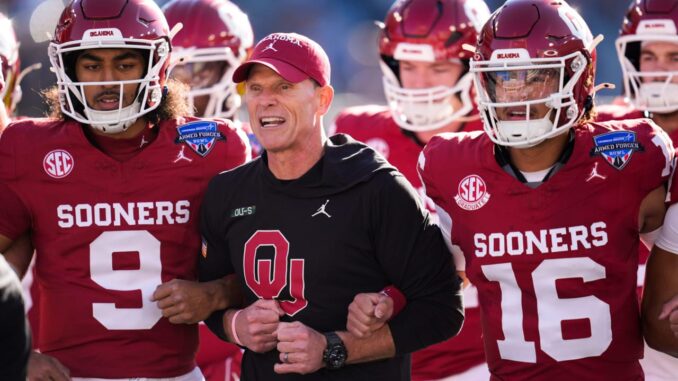
Late-Roster Bombshell: Oklahoma Sooners Catch Everyone Off Guard With Major Late-Roster Addition For Another Key Player
The Oklahoma Sooners have once again caught the college football world off guard with an unexpected roster move that could become increasingly important as the 2026 season moves forward. Oklahoma has added another experienced player to its roster at a time when most teams have already settled into their regular-season personnel, giving Brent Venables and his coaching staff another option to work with as they navigate the demanding SEC schedule.
The move comes during a particularly interesting period for Oklahoma. The Sooners entered the 2026 season with a roster that had already undergone significant changes, including additions through the transfer portal and the development of younger players. Yet the program continued looking for ways to strengthen its personnel, particularly on defense, where depth can become extremely important over the course of a long season.
Oklahoma’s recent roster activity has been connected to a new eligibility opportunity involving players from the 2022 recruiting class. The Sooners ultimately added four players through that process: defensive linemen Danny Saili and Braxton Fely, linebacker Jaydon Southard and defensive back D’Yoni Hill. The four players were added after the regular season had already begun, making the move highly unusual in the modern college football landscape.
The additions were not simply about putting more bodies on the roster. Oklahoma identified areas where additional experience and depth could help, particularly along the defensive front and in the secondary. General manager Jim Nagy explained that the program had been in communication with the SEC and university administration throughout the process and had planned carefully around the possibility of adding players.
That approach is particularly significant because Oklahoma did not intend to remove existing players to make room for the newcomers. Nagy said the Sooners had roster spots available and wanted to use the unusual opportunity to improve the football team. The program also consulted team leaders about how the additions might affect different position groups and the locker room.
Among the new additions, D’Yoni Hill brings experience to an Oklahoma secondary that underwent substantial turnover. Hill was a starter at Wisconsin last season and gives the Sooners another veteran option at cornerback. Oklahoma entered the season with Eli Bowen and Courtland Guillory competing for prominent roles, while players such as Jacobe Johnson, Trystan Haynes and Dakoda Fields provided additional depth. Hill’s arrival gives the coaching staff another experienced defensive back to consider as the season progresses.
The timing could be particularly valuable because defensive backs are frequently asked to rotate during games, and the physical demands of SEC football can quickly test a team’s depth. A player with previous Power Four experience can potentially reduce the pressure on younger players while also giving the coaching staff additional flexibility with defensive packages.
Oklahoma also strengthened the interior defensive line with Danny Saili and Braxton Fely. Saili already saw action for the Sooners in the season opener against UTEP, recording a tackle while playing seven snaps. His previous SEC experience at Arkansas gave Oklahoma an experienced interior presence, while Fely arrived with a strong résumé from Boise State, where he was a three-year starter and earned all-conference recognition twice.
The defensive tackle position was an obvious area where additional depth could matter. Oklahoma lost several players from the previous season, leaving Jayden Jackson and David Stone among the prominent pieces expected to carry significant responsibility. Adding experienced players such as Saili and Fely gives the Sooners more options to rotate along the defensive front and potentially preserve the energy of their primary contributors as the season becomes more demanding.
Jaydon Southard represents another important piece of the late roster movement. The linebacker arrived from Stephen F. Austin after developing into a highly productive player at the FCS level. He earned first-team all-conference recognition in 2025 and gives Oklahoma another veteran presence at linebacker.
That addition also has implications beyond traditional defensive snaps. Oklahoma’s coaching staff values players who can contribute on special teams, and Nagy pointed specifically to the special-teams experience brought by the late additions. According to Nagy, Southard and another incoming player represented more than 700 combined special-teams snaps, providing the Sooners with experienced players who could potentially take some of those responsibilities away from regular starters.
The unusual roster situation has naturally generated plenty of attention because it happened after the season had already started. College football programs typically spend months constructing their rosters before the opening kickoff, making a significant September addition something that immediately attracts attention. Oklahoma, however, appears to have treated the situation as an opportunity to address weaknesses rather than simply waiting for the offseason.
There is also an adjustment period involved. Players joining a team after the season begins have to learn terminology, defensive calls, techniques, assignments and expectations while their new teammates are already preparing for upcoming opponents. Venables’ defensive system demands communication and discipline, meaning simply having physical ability is not enough. The new players have to understand their responsibilities before they can become reliable contributors.
That process makes the upcoming weeks particularly interesting for Oklahoma. The Sooners have already experienced a difficult early test, losing 17-10 to Michigan in Ann Arbor. Oklahoma entered that game ranked No. 11 but subsequently fell to No. 24 in the AP Top 25 after the loss.
With SEC competition ahead, the value of additional defensive depth could become more apparent. Oklahoma’s next scheduled game is against New Mexico, giving the coaching staff another opportunity to evaluate its personnel before the heart of conference play arrives.
The late roster movement also reflects how dramatically college football roster management has changed. Transfer opportunities, eligibility rulings and evolving roster rules have created circumstances that would have been extremely difficult to imagine only a few years ago. Programs now have to remain prepared to react to opportunities even after the season has begun.
For Oklahoma, the immediate objective is straightforward: turn the unexpected roster opportunity into meaningful depth. The Sooners already have established starters and promising young players across the defense, but the addition of experienced players gives Venables more options as injuries, fatigue and matchups become factors.
Whether every newcomer eventually earns a major role remains to be seen. What is clear is that Oklahoma was willing to act aggressively when an unusual opportunity presented itself. Rather than treating the roster as finished once the season began, the Sooners continued looking for ways to strengthen the team.
That makes the late additions one of the more intriguing developments surrounding Oklahoma football at this stage of the 2026 season. The players may not all immediately become starters, but their experience could prove valuable as the Sooners move deeper into a schedule that will demand quality depth at virtually every defensive position.
For a team trying to establish itself in the SEC, having additional experienced players available can make a meaningful difference over the course of a long season. Oklahoma’s latest roster move therefore gives fans another reason to watch closely as these newcomers settle into Norman and begin competing for playing time.
Leave a Reply