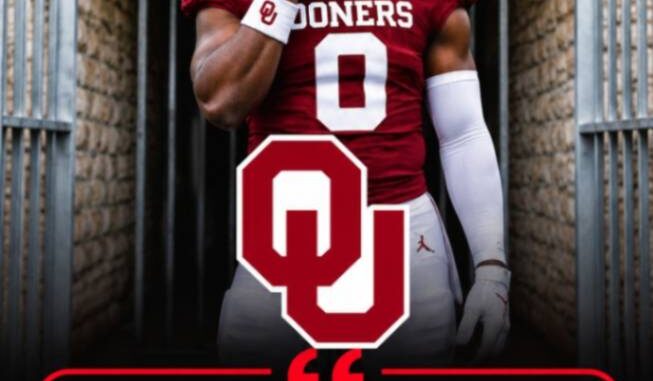
EXCITING NEWS: Oklahoma Sooners Flip Explosive In-State RB From Penn State After Losing Initial Recruiting Battles
The Oklahoma Sooners have reportedly secured a major recruiting victory after flipping the commitment of an explosive in-state running back who had previously been committed to Penn State. The development represents a significant boost for Oklahoma’s recruiting efforts and gives the program another talented offensive prospect to build around as the Sooners continue strengthening their roster for the future.
The highly regarded running back had attracted considerable attention from programs across the country, with Penn State initially appearing to be in a strong position to secure his services. However, Oklahoma’s persistence, renewed recruiting efforts, and connection to the prospect’s home state ultimately helped the Sooners turn the recruitment in their favor. The commitment is particularly meaningful for Oklahoma because of the importance of keeping elite in-state talent close to home.
For the Sooners, this represents more than simply adding another player to a recruiting class. Winning a recruiting battle against an established program such as Penn State demonstrates the importance of maintaining strong relationships with prospects and continuing to pursue talented players even when the initial recruiting process does not go according to plan.
Oklahoma has historically relied on talented running backs to establish its offensive identity. The program has produced numerous productive players at the position, and the coaching staff understands how important a strong running game can be when competing against elite defenses. Adding an explosive prospect with the potential to become a major contributor could provide another valuable option for the Sooners’ offense.
The running back’s decision to reconsider his commitment reportedly came after renewed attention from Oklahoma’s recruiting staff. The Sooners continued emphasizing the advantages of playing close to home, competing in a nationally recognized program, and developing within an offensive system that values athleticism and versatility.
Being an in-state prospect can create a unique recruiting dynamic. Players often have opportunities to represent their communities, families, and local football traditions on a national stage. For Oklahoma, successfully recruiting talented players from within the state remains an important part of building a competitive roster.
The Sooners have continued working to strengthen their recruiting presence throughout Oklahoma and neighboring regions. Their ability to attract talented prospects from the state can help establish a foundation for future success while also reducing the chances of highly regarded players leaving for competing programs.
Penn State had reportedly invested significant effort into the running back’s recruitment before initially securing his commitment. The Nittany Lions have developed a reputation for recruiting talented players and building competitive teams, particularly through their emphasis on physical football and offensive balance. Losing a committed prospect can be disappointing, especially when the player possesses the athletic ability to become an important part of the team’s future.

Nevertheless, recruiting decisions can change as prospects continue evaluating their options, relationships with coaching staffs, and long-term development opportunities. Players often revisit their decisions after additional conversations, campus experiences, and discussions with family members.
Oklahoma’s renewed pursuit appears to have made a strong impression, ultimately leading to the change in commitment.
The prospect’s explosive playing style is one of the reasons his recruitment attracted so much attention. Modern college football requires running backs capable of doing more than simply carrying the ball between the tackles. Teams increasingly value players who can create explosive plays, accelerate quickly through openings, make defenders miss in open space, and contribute to the passing game.
A dynamic running back can dramatically change the way opposing defenses approach a game. When a player possesses the ability to break long runs, defenses must commit additional attention to the running game, potentially creating opportunities for quarterbacks and wide receivers. That versatility can become a major advantage for an offense attempting to remain unpredictable.
Oklahoma’s coaching staff will likely view the prospect’s athletic ability as an opportunity to expand its offensive options. A talented running back can be used in traditional rushing situations, screen passes, motion-based formations, and other creative plays designed to take advantage of defensive weaknesses.
The ability to contribute in multiple ways is especially important in the modern college football landscape. Offensive coordinators increasingly seek players who can operate in different formations and create mismatches against defenders. A running back with speed, vision, balance, and receiving ability can become an extremely valuable weapon.
The commitment also has the potential to influence Oklahoma’s broader recruiting efforts. Recruiting momentum frequently develops when highly regarded prospects begin choosing the same program. Players often communicate with one another, discuss their experiences with coaching staffs, and consider whether they want to become part of a particular recruiting class.
Securing an explosive in-state running back could therefore encourage additional prospects to take a closer look at Oklahoma. The Sooners are constantly competing against other major programs for elite talent, and every recruiting victory can strengthen the perception that the program is building something special.
The coaching staff will also be encouraged by the prospect’s willingness to reconsider his original commitment. Recruiting battles are rarely straightforward, and programs must remain patient when pursuing players who initially choose another school. Maintaining communication and demonstrating genuine interest can sometimes make the difference when a prospect begins reevaluating his options.
Oklahoma’s persistence in this recruitment highlights the importance of never completely abandoning a recruiting target when circumstances remain favorable. The Sooners continued pursuing the player, and their efforts ultimately produced a potentially important addition to the program’s future.
For Oklahoma fans, the commitment provides another reason to remain optimistic about the team’s recruiting direction. The Sooners have ambitious goals, and building a talented roster requires consistently attracting players capable of competing against the strongest teams in college football.
The running back position remains particularly important because it can influence the overall balance of an offense. A productive rushing attack can help control possession, reduce pressure on the quarterback, create opportunities for play-action passing, and provide an effective option in short-yardage situations.
However, the transition from high school football to the college level will require considerable work. Even highly rated running backs must adapt to faster defensive players, more complex schemes, and the physical demands of competing against experienced athletes. Oklahoma’s coaching staff will need to help the prospect develop his understanding of blocking assignments, ball security, route-running responsibilities, and decision-making.
The expectations surrounding a highly recruited player can be significant, but development remains the most important part of the process. Recruiting rankings and athletic potential provide an indication of what a player might accomplish, but consistent preparation and performance ultimately determine his impact on the field.
If the prospect develops according to expectations, Oklahoma could eventually have another dynamic playmaker capable of making a difference in important games. His explosiveness and ability to create opportunities could provide the Sooners with an additional offensive weapon as they continue pursuing their competitive goals.
The commitment could also serve as a reminder of Oklahoma’s determination to compete for the best players in its recruiting territory. Losing initial recruiting battles can be frustrating, but the Sooners have demonstrated that their pursuit of talented prospects does not necessarily end after an early decision.
Ultimately, flipping an explosive in-state running back from Penn State would represent an important recruiting achievement for Oklahoma. It would strengthen the program’s offensive foundation, reinforce its commitment to recruiting local talent, and potentially create additional momentum for the class.
Oklahoma supporters will now be eager to see how the recruiting class develops and what the prospect could eventually bring to the offense. With the Sooners continuing to pursue talented players and strengthen their roster, this recruiting development could become an important part of the program’s future plans.
Leave a Reply