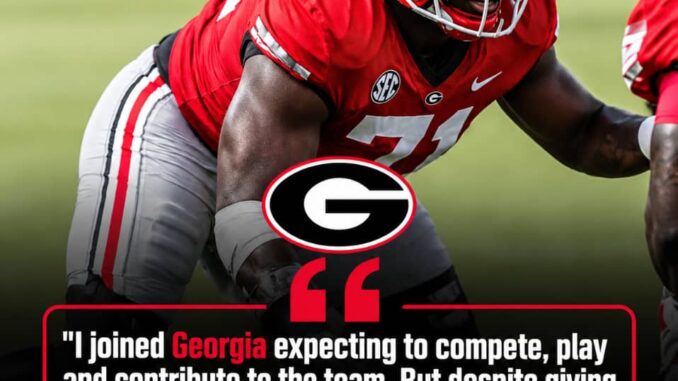
Four-Star Georgia Bulldogs Defensive End Announces He Will Leave Program After Limited Role Creates Uncomfortable Fit
The Georgia Bulldogs have built their reputation on developing elite defensive talent, competing for championships, and maintaining one of the deepest rosters in college football. However, even a program with Georgia’s impressive track record must manage the difficult reality of roster competition, where talented players sometimes find themselves struggling to secure the opportunities they expected when they committed to Athens. That challenge has now become a major talking point following the decision of a four-star defensive end to leave the program after his limited role created an increasingly uncomfortable fit.
The decision represents another reminder of how quickly circumstances can change for highly recruited prospects entering the demanding environment of SEC football. Players arrive at Georgia with expectations of developing into impact performers, earning meaningful playing time, and eventually positioning themselves for opportunities at the professional level. Yet the competition for defensive snaps can be unforgiving, particularly at a school where experienced veterans and highly rated younger players frequently compete for the same positions.
For the defensive end involved, the decision to move on reflects the difficult balance between remaining patient within a championship-caliber program and pursuing a situation where his abilities might receive greater recognition. Although Georgia continues to value depth along the defensive front, a player’s individual development can become complicated when opportunities on the field do not match expectations.
The four-star prospect entered Georgia with considerable promise, attracting attention because of his physical tools, athletic ability, and potential to become an important contributor to the Bulldogs’ defensive line. Recruiting evaluations suggested that he possessed qualities capable of translating into success at the highest level of college football. His commitment also represented a significant investment in a program widely respected for transforming defensive prospects into productive SEC performers.
However, recruiting rankings alone cannot guarantee a prominent role once a player reaches college. Defensive linemen must adjust to increased physical demands, learn complicated assignments, improve their technique, and demonstrate consistency during practices and games. At Georgia, those requirements become even more demanding because the competition includes players who have already demonstrated their ability to perform against elite opponents.
The resulting environment can create difficult decisions for young athletes who believe they have reached a point where they need more opportunities to demonstrate their progress. For a defensive end with four-star credentials, remaining on the sidelines for extended periods can raise questions about how quickly his development will translate into meaningful production.
Limited playing time appears to have been central to the growing disconnect between the player’s expectations and his position within the Bulldogs’ defensive rotation. Defensive ends depend on repetition to develop their pass-rushing instincts, improve their ability to disengage from offensive tackles, and learn how to respond to different blocking schemes. Without consistent game opportunities, even a talented player may struggle to establish momentum.
Georgia’s defensive system demands discipline and versatility from its edge defenders. They must generate pressure on quarterbacks, contain mobile signal-callers, defend against outside runs, and contribute to a coordinated pass rush. Coaches also expect defensive linemen to maintain their assignments within a larger defensive structure rather than pursue individual statistics at the expense of the overall unit.
Those responsibilities make experience particularly valuable. Established players who understand the system and consistently execute their assignments often receive opportunities ahead of younger prospects who are still learning. While that approach can strengthen the defense as a whole, it can also leave talented reserves searching for a clearer path toward meaningful playing time.
The Bulldogs’ situation illustrates the challenge of balancing immediate team success with the individual development of every player on the roster. Georgia cannot guarantee extensive playing time to every highly recruited defensive lineman, especially when multiple athletes possess similar physical attributes and competitive ambitions.
For the departing defensive end, the growing discomfort surrounding his role ultimately raises the question of whether another program might provide a better environment for the next stage of his career. A transfer could offer a fresh beginning, a different defensive scheme, and a more direct opportunity to compete for a starting position.
Such a move would not necessarily represent a rejection of Georgia’s development system. Instead, it could reflect an assessment that a different situation would better serve his immediate goals. College football has become increasingly shaped by player movement, with athletes evaluating their opportunities based on coaching relationships, positional competition, scheme fit, and long-term professional ambitions.
The transfer portal has changed how players approach these decisions. Previously, a highly recruited prospect might have been expected to remain at his original school and patiently wait for an opportunity to emerge. Today, players have greater incentives to evaluate whether their current situations provide a realistic path toward development and production.
For defensive ends, the stakes can be particularly significant. Pass rushers are often evaluated through their ability to pressure quarterbacks, record tackles for loss, and disrupt offensive game plans. Although coaches also value less visible contributions, consistent production can help players attract attention from professional scouts and improve their standing within the college football landscape.
A player who believes his development has stalled may therefore consider a change of scenery before losing additional time in a crowded depth chart. Finding a program that offers a complementary defensive scheme could allow him to demonstrate skills that have been difficult to showcase in his existing role.
Georgia, meanwhile, must continue managing its defensive personnel with an eye toward both the current season and future campaigns. Losing a talented prospect can affect depth, particularly when injuries or unexpected changes force coaches to rely on younger players. Defensive line rotations are important throughout a demanding SEC schedule, where physical matchups can test a team’s ability to sustain pressure over four quarters.
Nevertheless, the Bulldogs have consistently recruited at a level that allows them to bring multiple talented defenders into the program. Their ability to replenish the roster remains one of their greatest strengths, even when individual departures create temporary challenges.
The coaching staff will also need to ensure that the remaining defensive ends understand the opportunities available to them. Competition can motivate players to improve, but maintaining a healthy locker-room environment requires clear communication about expectations, responsibilities, and the standards necessary to earn playing time.
For younger defenders, the situation offers a clear lesson about the realities of elite college football. Recruiting success provides an opportunity to compete, but sustained development requires patience, adaptability, and consistent performance. Players must be prepared to compete against teammates who share similar ambitions and who may already possess greater experience within the system.
At the same time, the decision highlights the importance of individual career planning. A player’s college experience involves more than the prestige of wearing a particular uniform. Meaningful opportunities to improve, contribute, and demonstrate readiness for the next level can be just as important as joining a nationally recognized program.
The defensive end’s departure could eventually create an opportunity for another player to move into the rotation, while giving the departing prospect a chance to pursue a more suitable role elsewhere. The ultimate impact will depend on where his career takes him next and how effectively he adapts to a new environment.
For Georgia, the immediate priority remains maintaining the strength of its defensive front while preparing for the challenges ahead. The Bulldogs understand that championship ambitions depend on depth, preparation, and the ability to keep multiple defenders ready for significant responsibilities.
The situation also reinforces a broader reality of modern college football: talent alone does not always produce a comfortable fit. Even four-star prospects must navigate difficult competition, shifting priorities, and decisions about their futures. When a player’s ambitions and available opportunities begin moving in different directions, a change of program can become an appealing option.
As Georgia continues pursuing its goals, the departure serves as a reminder that roster management extends beyond recruiting rankings and star ratings. Coaches must build a defense capable of winning games, while players must determine where their abilities can translate into the greatest opportunities.
For the four-star defensive end, the next chapter will be defined by what he can accomplish in a setting that better matches his expectations. A fresh opportunity could give him the chance to turn his recruiting promise into consistent production, while Georgia moves forward with the ongoing challenge of maintaining one of college football’s most competitive defensive units.
Leave a Reply