Alabama Loses More Than Just the Game Against Tennessee After an Alarming Injury Update From Head Coach Kalen DeBoer
The Alabama Crimson Tide could be facing a difficult stretch following their loss to the Tennessee Volunteers, with concerns about player health adding another layer of uncertainty to an already disappointing result. For head coach Kalen DeBoer and his staff, the challenge extends beyond reviewing what went wrong on the field. Managing injuries, evaluating the team’s depth, and preparing the roster for the next test could become just as important as correcting the mistakes that contributed to the defeat.
Alabama entered the Tennessee matchup with high expectations, as the program continues to pursue its place among the nation’s elite college football teams. Games between these two Southeastern Conference rivals rarely lack intensity, and the latest meeting carried significant importance for both teams. However, a defeat can have consequences that stretch well beyond the final score, particularly when questions emerge about the availability of key players moving forward.
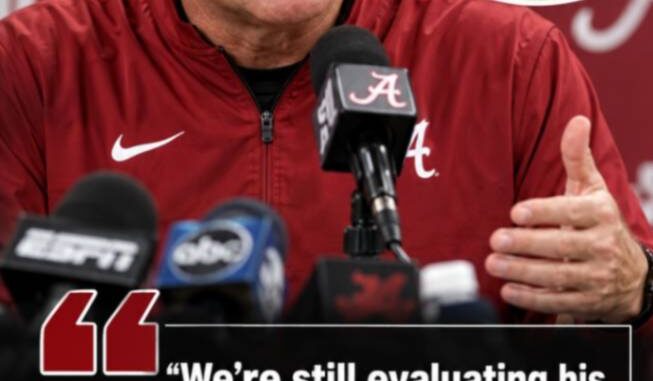
The attention surrounding DeBoer’s injury update has placed the spotlight on Alabama’s medical evaluations and the uncertainty that often follows a physically demanding SEC contest. When a coach discusses injuries after a game, every word matters to supporters trying to understand whether a player will miss practice, sit out the next matchup, or face a longer recovery period. For a team with championship ambitions, even one significant absence can force adjustments across multiple positions.
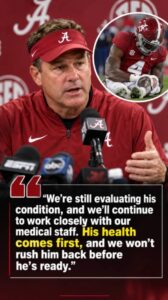
Alabama’s immediate concern is ensuring that its players receive the appropriate evaluation before any decisions are made about their return. Football is an exceptionally physical sport, and the demands of competing against a conference opponent can leave players dealing with everything from minor knocks to injuries that require extended rehabilitation. The distinction between those situations is crucial, particularly when the schedule offers limited time to recover before another demanding assignment.
For DeBoer, the priority must be balancing the urgency of preparing for the next game with the responsibility of protecting his players. Coaches naturally want their best athletes available, but rushing an injured player back onto the field can create additional complications. The medical staff must determine what each player can safely handle, while the coaching staff prepares alternative plans in case the original lineup cannot be maintained.
The uncertainty also creates an opportunity for Alabama’s depth players to demonstrate their readiness. Every major college football program recruits talented athletes with the expectation that they will eventually be called upon when circumstances demand it. However, replacing an established starter is rarely as simple as inserting another player into the lineup. Communication, timing, experience, and familiarity with the offensive or defensive system can all influence how effectively a replacement performs.
If Alabama must adjust its lineup because of injuries, the impact could be felt across several areas of the game. On offense, the absence of an important contributor could affect the team’s ability to establish consistency, sustain drives, or execute its preferred game plan. Changes along the offensive line, for example, can influence protection, running lanes, and the quarterback’s comfort in the pocket. Even when the replacement is talented, developing the necessary chemistry takes preparation.
Defensively, personnel changes can create a different set of challenges. Alabama’s defensive structure depends on players understanding their assignments, recognizing offensive formations, and reacting quickly under pressure. Losing an experienced defender could require other players to assume greater responsibilities, while the coaching staff might need to simplify certain assignments or alter personnel packages. Against SEC opponents capable of exploiting small mistakes, those adjustments can become particularly important.
Special teams should not be overlooked either. Injuries affecting players who contribute to coverage units, returns, or kicking operations can disrupt the consistency of a phase that often determines field position. In close games, a single mistake on special teams can change momentum, making reliable depth an important part of a team’s overall preparation.
Beyond the tactical consequences, the emotional impact of a difficult loss combined with injury concerns can also influence a team’s response during the following week. Players may feel frustrated about the result, disappointed for injured teammates, or determined to prove that the setback will not define their season. The coaching staff must channel those emotions into productive preparation rather than allowing frustration to interfere with execution.
DeBoer’s leadership will therefore be under close examination as Alabama attempts to respond. Supporters want to see a team that learns from its mistakes, competes with greater consistency, and demonstrates the resilience associated with successful programs. A strong response begins with an honest assessment of the previous performance, followed by a clear plan for improving execution in practice.
The coaching staff will need to evaluate the areas that contributed to the Tennessee defeat without losing sight of the larger season. Missed tackles, turnovers, penalties, inconsistent blocking, and difficulties sustaining offensive drives can all influence the outcome of a football game. Determining which problems were caused by execution and which resulted from strategic decisions is essential if Alabama hopes to make meaningful progress.
At the same time, the injury situation could influence how aggressively the team approaches its next practices. Players who remain healthy will be expected to take on additional work, while those dealing with physical problems may need modified workloads. Practice repetitions become particularly valuable when the depth chart changes, giving potential replacements opportunities to build confidence before the pressure of game day returns.
The situation also places renewed emphasis on conditioning and roster management. The SEC schedule demands sustained physical performance over several months, and teams must find ways to keep players fresh while maintaining the intensity necessary for high-level competition. Injuries cannot always be prevented, but thoughtful workload management, rehabilitation, and preparation can help teams navigate difficult periods.
For Alabama supporters, the biggest question is how much the injury concerns will affect the team’s immediate outlook. That question cannot be answered by speculation alone. The severity of each injury, the results of medical evaluations, and the players’ progress during the week will ultimately determine who is available. Until those details become clear, the coaching staff must prepare for multiple possibilities.
The loss to Tennessee has already placed pressure on Alabama to respond, and any extended absence involving an important player would make the task more demanding. Nevertheless, adversity is part of college football, and successful teams are often distinguished by their ability to adapt when circumstances do not unfold as planned.
Alabama has a long tradition of competing with high expectations, and the standard surrounding the program leaves little room for prolonged disappointment. That history does not guarantee an immediate recovery, but it does explain why every setback attracts such intense attention. Players, coaches, and supporters understand that the response to a difficult Saturday can influence the direction of the weeks that follow.
Ultimately, Alabama’s next steps will depend on two closely connected priorities: getting injured players the care they need and improving the performance that led to the defeat. DeBoer and his staff must make careful decisions about personnel while ensuring that the healthy members of the roster are ready to handle increased responsibilities.
The Tennessee game may be over, but its consequences could continue to shape Alabama’s preparation in the days ahead. The final score tells only part of the story. Injury evaluations, roster adjustments, tactical corrections, and the team’s response to adversity will help determine what comes next for the Crimson Tide.
For now, Alabama faces a defining test of its depth and resilience. The challenge is not simply to move past a disappointing result, but to ensure that the setback becomes a reason for improvement rather than a source of further frustration. How the team responds in the coming weeks will reveal much about its ability to remain competitive when the pressure is highest.
Leave a Reply