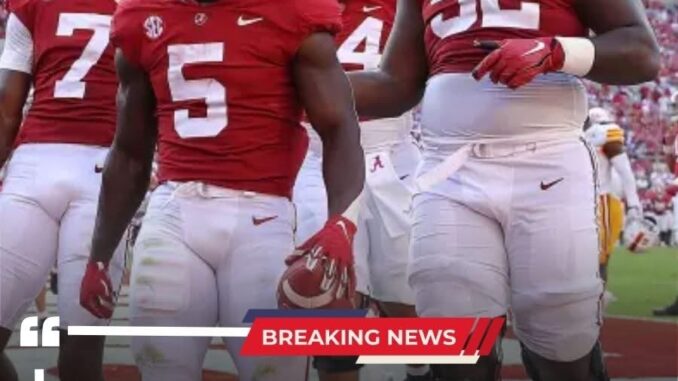
The Alabama Crimson Tide enter the 2026 offseason facing a stark reality: their offensive line was a glaring weakness throughout the 2025 season, contributing to a disappointing Rose Bowl blowout against Indiana and a one-dimensional attack that struggled to run the ball effectively. With massive portal exodus—including multiple starters like Kadyn Proctor, Parker Brailsford, and others departing—the trenches are in desperate need of a complete rebuild. Analysts emphasize that revamping the offensive line must remain the top priority if Kalen DeBoer hopes to elevate the program back to elite status in the SEC and College Football Playoff.
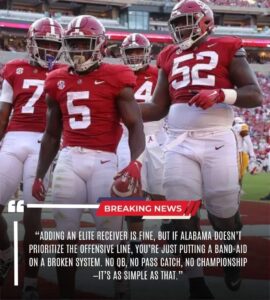
Yet, the program continues to aggressively pursue high-profile wide receivers in both the transfer portal and recruiting trails, with names like elite prospects and potential flips drawing headlines. The receiver room, while talented with returners and additions like transfers Noah Rogers, still seeks more explosive playmakers to complement the air-raid elements of DeBoer’s scheme. This pursuit raises legitimate questions: in an era where NIL and portal dynamics reward star power at skill positions, is Alabama over-investing in flashy weapons while the foundation crumbles up front?
Critics argue this approach could be a dangerous gamble. The 2025 campaign exposed how poor line play hampered quarterback protection and rushing production, leading to stalled drives and vulnerability against top defenses. Adding star receivers won’t magically fix those issues if the quarterback has no time or the running backs lack holes—trenches win games in the SEC, and ignoring that reality risks repeating the same late-season collapses.
On the flip side, Alabama isn’t entirely neglecting the line. They’ve secured key high school commits like multi-position talents in the 2026 class, landed portal additions such as Michigan’s Kaden Strayhorn and former five-star Ty Haywood, and continue hosting offensive linemen visits. The staff recognizes the need for at least one or two more starter-caliber pieces, and resources are being allocated to bolster the group amid heavy attrition.
Still, the balance feels precarious. While a loaded receiver corps could make the offense explosive when protection holds, the program’s history of dominance was built on trench superiority. Chasing star receivers is understandable given the talent drain at the position, but it cannot come at the expense of securing a formidable offensive line—otherwise, the high-ceiling playmakers may never reach their potential.
Ultimately, Alabama isn’t ignoring the trenches entirely, but the emphasis on skill-position fireworks could prove costly if the line rebuild falters. DeBoer and his staff must prioritize protection and run-game physicality to avoid risking another underwhelming season. The path to reclaiming glory runs through the big uglies first—star receivers are the reward, not the foundation.
Leave a Reply