COLLEGE FOOTBALL SHOCKWAVE: Alabama, NIL, and the Battle for the Soul of the Game
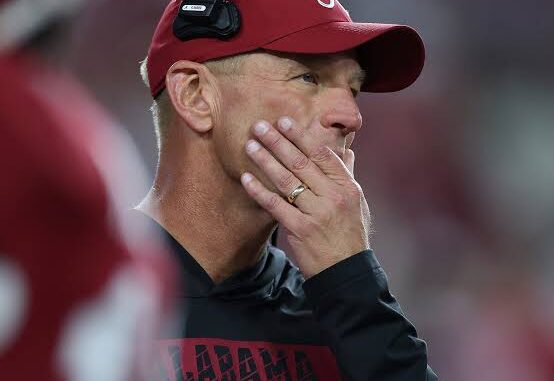
The moment Kalen DeBoer stepped up to the podium, few expected the aftershocks that would follow. The Alabama Crimson Tide had just finished another high-stakes contest, the kind of game that routinely defines seasons and shapes legacies in Tuscaloosa. The cameras were rolling, the room was tense but familiar, and the questions followed the usual script. Yet within minutes, the press conference transformed from routine postgame analysis into a defining moment for college football itself. DeBoer’s words, measured but unmistakably sharp, cut through the room as he described the modern NIL environment as a “Wild West,” warning that a sport once built on tradition, identity, and development was being pulled apart by unchecked financial influence.
For Alabama, a program synonymous with discipline, structure, and continuity, the remarks felt seismic. This was not a fringe coach or a struggling program lashing out in frustration. This was the head coach of college football’s most iconic powerhouse, speaking from the center of the sport’s biggest stage. Almost instantly, his comments rippled across the nation, dominating conversations among fans, administrators, athletes, and media figures alike. Some hailed DeBoer as a truth-teller willing to say what many had only whispered. Others accused him of hypocrisy, arguing that Alabama had benefited from every era of competitive advantage and now feared losing control in a rapidly changing landscape.
To understand why DeBoer’s comments landed with such force, one must first understand what Alabama represents. For decades, the Crimson Tide has stood as a symbol of college football’s old order. Championships were earned through relentless recruiting, elite development, and a culture that demanded sacrifice in service of the program. Players arrived as promising teenagers and left as polished professionals, often after years of grinding through depth charts and earning trust. Money existed, of course, but it lived in the shadows, unspoken and unofficial. The illusion of amateurism remained intact, even when everyone knew it was fragile.
The rise of NIL shattered that illusion overnight. Suddenly, endorsements, collectives, and branding deals became not only legal but celebrated. Players gained agency, leverage, and financial independence in ways previous generations could scarcely imagine. In theory, it was a correction, a long-overdue acknowledgment that athletes were more than just students wearing helmets. In practice, however, the transition was chaotic. Rules were vague, enforcement inconsistent, and the line between opportunity and exploitation blurred almost immediately. It was this disorder that DeBoer seemed to be confronting head-on.
In his remarks, he spoke not as a rebel but as a caretaker, someone tasked with preserving something bigger than wins and losses. He framed the issue as a moral and cultural crisis, not merely a competitive one. When he warned that money-driven programs were “destroying the soul of college football,” he was not condemning players for earning income. Instead, he was questioning a system that, in his view, prioritized short-term transactions over long-term development, turning locker rooms into marketplaces and teammates into assets.
The reaction was swift and polarized. Supporters of DeBoer argued that he had articulated the fears of countless coaches struggling to manage rosters that changed overnight. They pointed to recruiting battles decided not by fit or vision but by bidding wars. They spoke of players leaving midseason, chasing better offers, and of locker room tensions fueled by unequal deals. To them, DeBoer was defending the essence of the sport, where loyalty, growth, and shared struggle mattered as much as talent.
Critics, however, saw a different story. They questioned whether Alabama, with its massive resources and national brand, truly stood to lose in the NIL era. They accused DeBoer of nostalgia, of clinging to a romanticized past that had never fully existed. They reminded everyone that college football had always been a business, even if it pretended otherwise. In their view, NIL simply shifted power toward the athletes, exposing uncomfortable truths about a system long built on unpaid labor.
At the heart of the controversy lay a deeper question about identity. What is college football supposed to be? Is it a developmental league for professional sports, a community institution, an entertainment product, or all of the above? For Alabama fans, this question cut especially deep. The Crimson Tide’s identity had been forged through continuity and hierarchy. Players bought into “the process,” trusting that patience would eventually be rewarded. NIL threatened to disrupt that rhythm, introducing individual branding into a culture that prized collective sacrifice.
Inside the program, DeBoer’s comments were reportedly met with a mix of agreement and unease. Some players appreciated the honesty, seeing their coach as someone willing to advocate for stability and fairness. Others worried about how the remarks might be perceived by recruits and agents navigating a marketplace where leverage is everything. In a sport where perception can shape reality, words carry weight, and Alabama’s stance on NIL could influence its future more than any single game plan.
Beyond Tuscaloosa, administrators across the NCAA found themselves under renewed scrutiny. DeBoer’s comments reignited debates that conference meetings and policy statements had failed to resolve. The lack of a unified framework for NIL had created disparities between programs, states, and conferences. Some schools operated within carefully structured collectives, emphasizing education and compliance. Others embraced a more aggressive approach, openly using NIL as a recruiting tool. The result was a landscape where competitive balance felt increasingly fragile.
The NCAA, already weakened by legal challenges and shifting power dynamics, appeared ill-equipped to respond. DeBoer’s remarks underscored a leadership vacuum, a sense that the sport was drifting without a compass. While conferences pursued media deals and playoff expansions, the foundational questions about athlete compensation and program integrity remained unresolved. In that context, DeBoer’s press conference felt less like an outburst and more like an indictment of systemic failure.
Media coverage amplified the drama, framing the moment as a turning point. Pundits debated whether DeBoer had crossed a line or simply drawn one. Former players weighed in, offering perspectives shaped by their own experiences in eras before NIL. Some expressed envy, others relief that today’s athletes had opportunities they never did. The conversation expanded beyond football, touching on broader themes of labor rights, capitalism, and the commercialization of youth sports.
Yet amid the noise, the human element risked being lost. At its core, college football remains a game played by young men navigating pressure, expectation, and identity. NIL added another layer to that complexity, asking players to become entrepreneurs while still balancing academics and athletics. DeBoer’s comments, controversial as they were, reflected concern about whether the system was serving those athletes or simply monetizing them.
For Alabama, the path forward was uncertain but unavoidable. The Crimson Tide could not opt out of NIL, nor could they retreat into tradition. Instead, they faced the challenge of integrating a new reality without losing their core values. That meant redefining leadership, communication, and culture in an era where loyalty could no longer be assumed. DeBoer’s willingness to speak openly suggested that he understood the stakes, even if the solutions remained elusive.
The controversy also highlighted generational divides within the sport. Older coaches and fans often emphasized stability and tradition, while younger players and recruits prioritized flexibility and opportunity. Neither perspective was inherently wrong, but bridging the gap required empathy and innovation. DeBoer’s remarks forced that conversation into the open, challenging all stakeholders to confront uncomfortable truths.
As weeks passed, the immediate outrage softened, but the underlying issues remained. Alabama continued to compete, to recruit, to adapt. Other coaches echoed DeBoer’s concerns, sometimes more cautiously, sometimes more bluntly. The NIL era marched on, reshaping college football in real time. Yet the press conference lingered in collective memory, a moment when one of the sport’s most powerful voices paused the game and asked what it was becoming.
In retrospect, the significance of DeBoer’s comments may not lie in the controversy they sparked, but in the questions they raised. College football has always evolved, from segregation to integration, from regional rivalries to national championships, from bowl games to playoffs. NIL is simply the latest chapter in that ongoing transformation. Whether it represents progress or peril depends on how the sport responds.
For Alabama, the challenge is existential but familiar. The program has survived coaching changes, rule shifts, and cultural upheavals before. Its identity has always been rooted in adaptation as much as tradition. DeBoer’s stance suggests a desire not to resist change, but to shape it, to ensure that the Crimson Tide remains more than just a brand in a marketplace.
Ultimately, the shockwave that followed that press conference was a reminder of college football’s power to reflect broader societal tensions. Money, identity, fairness, and legacy collided in a single moment, forcing fans and leaders alike to choose what they value most. Whether DeBoer’s words lead to reform or fade into history, they captured a truth that cannot be ignored. College football stands at a crossroads, and the decisions made now will define not only who wins championships, but what the sport means for generations to come.
Leave a Reply