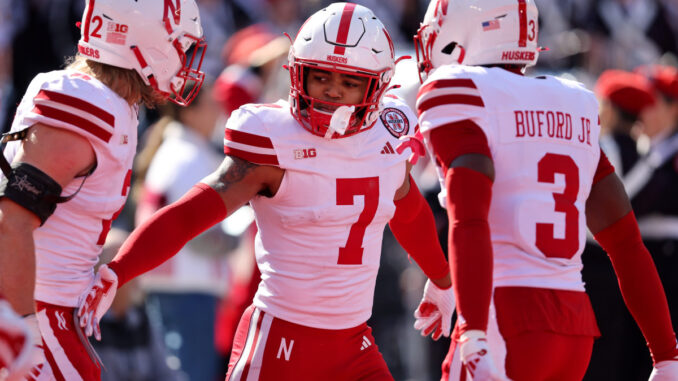
HAS COLLEGE FOOTBALL LOST ITS SOUL?
Lifelong Nebraska boosters and former players admit their passion is fading as NIL money and playoff politics reshape the sport. Ratings are up — but is the heart of the game quietly disappearing?*
On autumn Saturdays in Nebraska, the sky still turns that familiar pale blue, the wind still carries the smell of grilled corn and charcoal, and Memorial Stadium still fills with red long before kickoff. From a distance, nothing looks broken. The chants still echo. The tunnel walk still sends a ripple through the crowd. The cameras still pan across smiling students and painted faces. Television executives will tell you the numbers are strong. Advertisers will tell you the audience is loyal. Social media will tell you the sport has never been louder.
Yet in the quiet spaces between cheers, something else is happening.
It is happening in the conversations of lifelong boosters who once planned their entire year around home games. It is happening in the reflections of former players who remember when a scholarship felt like a sacred gift instead of a negotiating chip. It is happening in the living rooms of fans who now watch more out of habit than hunger. They are beginning to ask a question that once felt impossible.
Has college football lost its soul?
For many in Nebraska, college football was never just entertainment. It was identity. It was family inheritance. It was the first game attended holding a parent’s hand, the first heartbreak in the rain, the first roar that made your chest vibrate. It was a story passed down, not a product consumed. You did not choose the Huskers the way you choose a streaming service. You were born into them. You carried them with you through good seasons and terrible ones, through coaching changes and recruiting disappointments, through jokes from rival fans and long drives home after losses.
Now, some of those same fans admit something that feels almost like betrayal.
They are tired.
Not tired of losing. Nebraska fans have known losing before. Not tired of rebuilding. They have endured that too. They are tired of the feeling that the game no longer belongs to them.
Name, Image, and Likeness money has transformed college athletes into brands before they have fully become adults. On paper, it is progress. Players finally receive compensation in a system that once profited enormously from their labor. It is difficult to argue against fairness when young men risk their bodies while universities and networks collect billions. The problem is not that players are earning. The problem is that the emotional contract between fan and athlete has changed in ways no one prepared for.
A Nebraska booster in his late sixties once said, “I used to know the kids on the roster. I followed them from high school. I watched them grow. Now I feel like I’m watching temporary employees.”
That sentence captures more than nostalgia. It captures a fracture in connection. When players can leave at any moment for a better deal, when recruiting never really ends, when loyalty is openly described as a business decision, fans struggle to invest emotionally. They still cheer, but they hesitate to believe. They still buy jerseys, but they wonder how long that name will matter.
Former players feel it too.
One former Husker lineman, fictional yet familiar in spirit, once described returning to campus and feeling like a guest in a place that used to be home. He watched younger players negotiate NIL agreements with the confidence of seasoned agents. He did not resent them. He admired their courage. But he also felt something slipping away. When he played, the locker room was a sanctuary. It was imperfect, sometimes harsh, often unfair, but it was unified by a shared struggle. Now, he saw invisible lines drawn by contracts and endorsements.
He said, “We used to fight for each other. Now they fight for their market.”
Again, not wrong. Just different.
The playoff expansion added another layer to the transformation. What was once a chaotic, imperfect, but deeply emotional system of bowls, debates, and regional pride has become a streamlined path to national relevance. In theory, this is good. More teams have access. More games matter. More fanbases have hope. But the price has been subtle. Rivalries that once defined seasons now feel like checkpoints. Conference pride has been replaced by bracket survival. The storylines are no longer about tradition as much as positioning.
A Nebraska fan once described it as watching your favorite childhood street get turned into a highway. It is faster. It is more efficient. It is undeniably impressive. But it no longer feels like yours.
Ratings, ironically, are higher than ever. Social media engagement explodes every Saturday. Clips go viral. Debates rage. The sport is louder, brighter, richer. From a business perspective, college football is thriving. From a cultural perspective, it may be drifting.
The heart of the game was never about perfection. It was about imperfection. It was about a backup quarterback who became a hero for one night. It was about a walk-on who earned a scholarship. It was about fans believing, irrationally and beautifully, that loyalty mattered more than logic. It was about players staying not because they were paid to stay, but because they wanted to finish what they started.
Now, finishing what you started is considered naïve.
Young athletes are taught to maximize value, to protect their brand, to think ahead. Again, this is not evil. It is survival in a system that once exploited them. But in correcting one injustice, the sport may have wounded its emotional core.
Nebraska boosters used to donate because they believed in the program. Now many admit they donate because they fear falling behind. The joy has been replaced by obligation. The pride has been replaced by competition. Instead of asking how to build culture, discussions revolve around how to outbid rivals.
Former players notice the shift when they speak to current athletes. Conversations that once centered on team goals now include sponsorships, social media presence, and future leverage. The locker room language has changed. The dreams are no longer only about winning for the school. They are about winning for the portfolio.
And yet, the crowd still fills the stadium.
This is the paradox. College football is not dying. It is evolving. But evolution does not always preserve the soul.
Some fans argue that every generation says the same thing. They say the game has always changed. They say nostalgia clouds judgment. They say the forward pass was once controversial, television contracts were once criticized, and conference realignment is simply another chapter. They are not wrong. Change is inevitable. But not all change feels the same.
There is a difference between growth and replacement.
When Nebraska boosters talk about fading passion, they are not saying they will stop watching. They are saying the watching feels different. The anticipation feels thinner. The heartbreak feels less personal. The victories feel less intimate.
A fictional but believable booster once said, “I still love the team. I just don’t recognize the relationship.”
That relationship used to be built on patience. Now it is built on transactions. It used to be built on long-term belief. Now it is built on short-term performance. It used to be built on shared sacrifice. Now it is built on individual opportunity.
None of these things are wrong in isolation. But together, they reshape the emotional landscape.
Even former players who support NIL privately admit they miss the innocence. They miss being unknown kids with everything to prove. They miss when mistakes were lessons instead of trending clips. They miss when loyalty was assumed, not negotiated.
One former quarterback once imagined what his career would look like in today’s environment. He believed he would have earned more money, more exposure, more freedom. But he also believed he would have felt less anchored. He said, “I would have been richer. I’m not sure I would have been happier.”
That sentence lingers.
College football once offered something rare in modern sports: a feeling that money was secondary to meaning. That illusion is now gone. And while illusions can be unhealthy, they can also be beautiful.
The heart of the game lived in those illusions.
It lived in believing that a school was more than a logo. It lived in believing that players were more than assets. It lived in believing that rivalries were sacred and seasons were stories, not just products in a content calendar.
When Nebraska fans speak of fading passion, they are not rejecting progress. They are mourning intimacy.
They still cheer when the band plays. They still stand when the team runs out. They still feel a spark when the ball is kicked into the air. But the spark no longer becomes a flame. It flickers, controlled by awareness of contracts, portals, and politics.
College football has become smarter. But in becoming smarter, it has become colder.
The question is not whether NIL or playoff expansion should exist. They should. The question is whether the sport can rediscover a way to protect emotional connection while embracing financial reality. Whether it can teach loyalty without demanding exploitation. Whether it can celebrate business without burying belonging.
Some fans believe the soul is not gone, only hidden. They believe it still lives in small moments. In a senior walking out of the tunnel one last time. In a crowd singing together after a loss. In a player choosing to stay when he could leave. In a coach choosing development over shortcuts. In a program choosing identity over headlines.
Those moments are quieter now. But they still exist.
College football may not have lost its soul completely. But it is undeniably at risk of forgetting where that soul came from.
It did not come from ratings. It did not come from contracts. It did not come from rankings.
It came from people believing in something bigger than themselves.
If the sport can remember that, the heart can still beat strongly.
If it cannot, college football will remain successful, profitable, and popular — yet strangely hollow.
And perhaps that is the greatest fear of Nebraska boosters and former players alike. Not that the game will disappear, but that it will continue to exist without the magic that once made it feel alive.
The stadiums will stay full. The screens will stay bright. The debates will stay loud.
But the soul of college football has always lived in something quieter.
It lived in belonging.
And belonging is the one thing money has never truly known how to buy.
Leave a Reply