HAS COLLEGE FOOTBALL LOST ITS SOUL?
When loyalty meets money, and tradition meets business
On fall Saturdays in Alabama, the air still smells the same. Grills still smoke behind pickup trucks. Old radios still crackle with pregame shows. The stadium still rises like a concrete cathedral against the sky. And yet, for many lifelong Alabama boosters and former players, something feels… different. Not broken. Not ruined. Just altered in a way that is hard to describe, harder to accept, and nearly impossible to reverse.
College football has never been innocent. It has always been about power, pride, influence, and money hiding behind pageantry. But for decades, those elements were masked by ritual and community. The game felt like it belonged to the people. Today, it increasingly feels like it belongs to negotiations, contracts, algorithms, and political alliances. Ratings are higher than ever. Social media engagement is explosive. Merchandise sales are booming. But in quiet conversations across Tuscaloosa, Birmingham, and small Alabama towns that live and die with the Crimson Tide, a troubling question keeps resurfacing: has college football lost its soul?
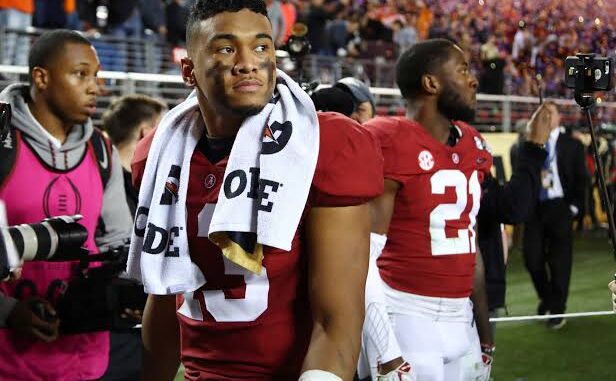
Older boosters speak of a time when players were known before they were famous. When a quarterback was not a brand but a neighbor’s son. When loyalty to a program felt sacred, not strategic. Former players remember locker rooms that felt like brotherhoods rather than temporary business partnerships. They are not bitter about progress. They are uneasy about what progress has demanded in return.
The introduction of NIL money did not create greed, but it exposed it. It did not invent ambition, but it accelerated it. College athletes finally gained the right to profit from their own name and image, a long overdue correction to an unfair system. Yet in fixing one injustice, the sport opened a door that cannot be closed. What was once a scholarship dream has become an early professional marketplace. Recruiting is no longer just about facilities, coaching staff, or tradition. It is about earning potential, exposure strategies, and financial projections.
Boosters who once donated to upgrade locker rooms now hear about collectives and bidding wars. High school players are discussed less as future leaders and more as financial assets. Fans who once memorized depth charts now track rumored deals. The language of love has been replaced with the language of leverage.
And yet, the crowds keep growing. The television numbers keep rising. The conferences keep expanding. The playoff grows larger, louder, more profitable. By every measurable business metric, college football has never been healthier. But sports are not sustained by numbers alone. They survive on emotion. On memory. On belief.
A former Alabama linebacker once said that what made the program special was not the trophies, but the weight of the jersey. He described putting it on as carrying the expectations of past generations. Today, he watches players transfer in and out with ease, sometimes wearing three different college uniforms in three years. He does not blame them. He understands the system. But he no longer recognizes the experience.
Transfer portals have turned rosters into revolving doors. Coaches speak about continuity while managing constant departures. Fans struggle to build emotional connections with players who might be gone by spring. Loyalty, once the backbone of college football identity, now feels negotiable.
For decades, Alabama fans prided themselves on something deeper than winning. They believed in process, discipline, patience, and legacy. The dynasty was not just about championships but about culture. But even that culture now competes with personal opportunity. A five-star recruit may choose Alabama today and leave tomorrow for a better situation. And he would not be wrong to do so. But the emotional contract between player and fan has quietly weakened.
Playoff politics have added another layer of disillusionment. Once, every game felt sacred. One loss could end everything. Now, losses are calculated. Schedules are debated like stock portfolios. Teams rest players with postseason positioning in mind. Rivalries that once burned with urgency are sometimes overshadowed by strategic considerations. The playoff has brought excitement, but it has also softened consequences.
Some former players argue that pressure built character. That knowing one mistake could cost a season forced greatness. Today, the margin for error has widened. The drama is still there, but the purity of finality is gone.
Meanwhile, conference realignments have reshaped geography and history. Rivalries built over generations are now disrupted by television contracts. Long road trips replace regional battles. The emotional logic of college football geography has been replaced by corporate logic. The sport has become national, but in doing so, it has lost some of its local heartbeat.
Alabama fans used to know exactly who their enemies were. Now, those lines blur. When everything becomes big, something small is lost.
The younger generation does not see this as loss. They see it as evolution. They grew up with streaming, highlights, social media, and instant access. They connect to players through Instagram more than through stadium seats. Their version of loyalty is flexible, mobile, and digital. They do not miss what they never had.
This is where the generational divide becomes visible. Older fans grieve a version of college football that no longer exists. Younger fans embrace a version that feels normal to them. Neither side is wrong. They are simply living in different emotional realities.
But emotion is the currency of sports. And when longtime boosters quietly stop attending games, when former players watch from home instead of from the stands, when lifelong fans say they still love Alabama but no longer feel the same fire, it signals something deeper than nostalgia. It signals a shift in identity.
College football used to feel like a story passed down. Today, it feels like a product updated.
Even within Alabama’s winning tradition, there is a subtle fatigue. Winning still matters. Championships still excite. But the celebration feels shorter. The satisfaction feels lighter. The sense of journey feels rushed. Fans consume seasons instead of living them.
Some former players describe watching games now as entertainment rather than experience. They enjoy it, but they do not feel part of it. They feel like customers.
And customers do not grieve losses the same way fans do. Customers switch channels. Fans suffer.
The heart of college football was never perfection. It was imperfection shared. Missed kicks, muddy fields, stubborn coaches, underdog victories, improbable comebacks. It was the idea that anything could happen because everything mattered.
Today, everything still matters, but it matters differently. It matters in spreadsheets, contracts, projections, and branding strategies.
None of this means college football is dead. It is louder than ever. Richer than ever. More visible than ever. But louder is not always deeper. Richer is not always purer. More visible is not always more meaningful.
The soul of something is not measured in profits. It is measured in how it makes people feel when no one is watching.
When Alabama boosters sit quietly and admit they no longer feel the same anticipation they once did, they are not rejecting progress. They are mourning intimacy. When former players say the locker room brotherhood feels diluted, they are not attacking modern athletes. They are missing connection.
The sport has gained opportunity but lost innocence. It has gained power but lost vulnerability. It has gained control but lost chaos.
And chaos, in many ways, was the soul.
College football’s future will likely be brighter, faster, and bigger. Stadiums will be grander. Broadcasts will be sharper. Players will be wealthier. And none of that is wrong.
But somewhere between NIL negotiations, playoff debates, conference reshuffles, and constant movement, the game risks becoming efficient instead of emotional.
Alabama will continue to win. Fans will continue to cheer. Children will still dream of wearing crimson. But the meaning of that dream is changing. It is no longer just about representing a state or a school. It is about building a career.
And careers are important. But stories are what endure.
College football’s soul is not gone. It is just quieter. It lives in small moments now. In a father teaching his son the fight song. In an old booster remembering a game from forty years ago. In a former player touching the stadium wall before kickoff. In a fan who still feels nervous on third down.
The soul has not died. It has simply been pushed into the background by brighter lights.
Whether it returns to the center of the game depends on what fans, players, and leaders choose to value. Because a sport can survive without a soul. But it can only inspire with one.
And perhaps that is the real question Alabama boosters and former players are asking. Not whether college football is still great. But whether it still feels like home.
Leave a Reply